







Downtown Atlanta Is Entering a New Era of Transformation
Three decades after the Centennial Olympic Games, Downtown Atlanta is undergoing a new wave of development that is redefining its urban landscape

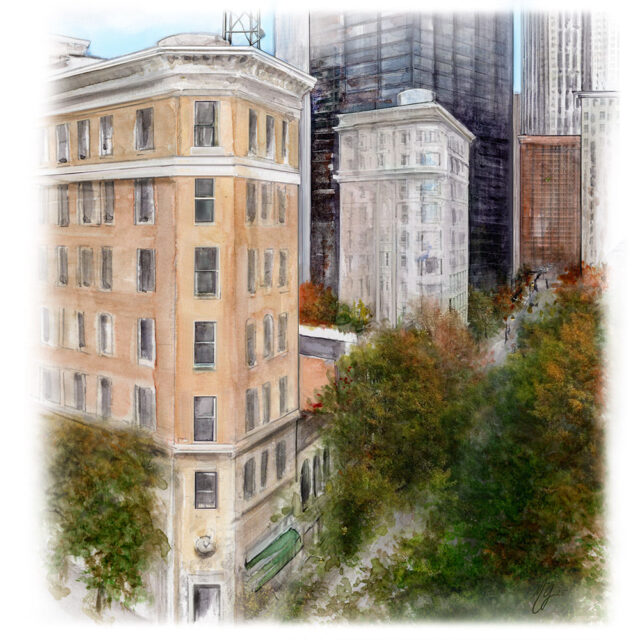
Downtown Atlanta
In 1996, when the world’s eyes turned to Atlanta for the Summer Olympic Games, Downtown transformed in ways that went far beyond the medal count. The creation of Centennial Olympic Park and the wave of investment and global attention that followed repositioned the city’s core as a hub for business and tourism. Three decades later, Downtown Atlanta, once again, is on the cusp of transformation. Anchored by Mercedes-Benz Stadium and the upcoming 2026 FIFA World Cup, the energy is palpable. Ambitious projects like Centennial Yards, the Five Points MARTA overhaul, and Underground Atlanta’s creative revival are reigniting the urban fabric, turning seemingly forgotten blocks into walkable, connected neighborhoods. All fueled by passionate Atlantans who believe the city’s soul still beats strong here.
History
Founded in the 1830s as the terminus of the Western & Atlantic Railroad, Downtown Atlanta grew from a frontier rail hub into the commercial heart of the New South. After being burned during the Civil War, Atlanta rebuilt quickly, and by the early 20th century, Peachtree Street bustled with theaters, hotels, and department stores, including cultural and civic landmarks like the Fox Theatre and Hurt Building. Surrounding these centers of commerce were early residential neighborhoods Fairlie-Poplar, Sweet Auburn, and Castleberry Hill, where merchants, professionals, and creatives built communities. Many of these areas have since evolved through adaptive reuse, preserving traces of Atlanta’s earliest homes. In the mid-20th century, visionary architect and developer John Portman reshaped downtown with landmark projects like AmericasMart Atlanta (originally the Atlanta Merchandise Mart), Peachtree Center, the Hyatt Regency Atlanta, the Westin Peachtree Plaza, and the Marriott Marquis—all still contributing to Downtown’s skyline and its polarizing (at least aesthetically) world of atriums and sky bridges.


$158K
Average sale price (last 12 months, single-family homes and condos)
$3.8B
New investments in the last five years
$5.2B
In recently completed, under construction, or upcoming planned projects
“I’m a product of Atlanta; in my lifetime we haven’t had a downtown that’s realized its potential. But between the investments of South Downtown, Centennial Yards and Underground, we’re going to have a downtown we can be proud of. Every great city in the world has a great downtown and it’s now Atlanta’s turn.” —Jon Birdsong, CEO of SoDo Atlanta, LLC
IYKYK
John Portman’s architectural influence on Downtown is globally renowned and you can spot his touches all over the district. Portman reimagined urban life as interconnected and climate-controlled, and created a network of elevated pedestrian bridges, glass atriums, and integrated office, hotel, and retail spaces that allowed people to walk multiple city blocks without ever going outside.
Big Brag
Downtown is what puts Atlanta on the world’s stage thanks to Mercedes-Benz Stadium, State Farm Arena, the National Center for Civil and Human Rights, and the Georgia Aquarium, and has played host to Super Bowls, Final Four tournaments, and the upcoming FIFA World Cup. Not to mention the 1996 Olympics, our forever “biggest brag.”
Residential Neighborhoods
Fairlie-Poplar Once the epicenter of early 20th-century commerce, Fairlie-Poplar still has some cobblestone and brick-lined streets, century-old facades, and the restored Flatiron Building, but is mostly now reimagined with loft living, indie coffeehouses, creative studios, and boutique hotels. The neighborhood’s Romanesque and Beaux Arts details give it a cinematic quality, making it a
favorite for film crews.
Castleberry Hill Historically an industrial corridor, Castleberry has transformed into a bohemian enclave of artists, entrepreneurs, and design-savvy residents, defined by exposed-brick warehouses, oversize lofts, art galleries, restaurants, and bars. It’s also one of the most photographed areas in the city thanks to the Nelson Street Bridge: Built in the early 20th century, it’s one of the most popular photo shoot locations in Atlanta for its stunning skyline and stadium views.
Mascot
The Phoenix, one of Atlanta’s most enduring and meaningful symbols.
Future
The biggest development story in Downtown right now is Centennial Yards, a 50-acre, multibillion-dollar transformation of the formerly underutilized “Gulch” between the Five Points MARTA Station, the rail corridor, and stadium and arena zone. The project will span millions of square feet of office, residential, hotel, retail, and entertainment space, plus public transit options, and initial phases are making headway, with leasing underway at a 304-unit tower called The Mitchell. For buyers and investors, this means working, living, and playing Downtown becomes increasingly attractive and walkable. It’s a rare opportunity to reimagine a city cornerstone and emphasize placemaking in one of Atlanta’s most important places. Adjacent to Centennial Yards is South Downtown, a project revitalizing 16 city blocks known as the Whitehall Historic District—this is where Georgia’s oldest company, Haverty’s, was founded, and where Rich’s and the Pink Pig became iconic Atlanta legends. The South Downtown mission includes restoring 50+ historic buildings brick-by-brick and turning the area into a start-up district, and it’s quickly evolving: it’s already home to several software companies, and before the World Cup, South Downtown will be home to 10 restaurants and a new apartment building.