







Natural Attraction

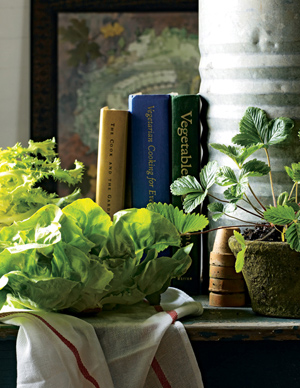
Lettuces and other spring greens can be planted early and harvested young, but they don’t stand a chance with our brutal summers. But nevermind; delicious squash and tomatoes get ripe just as lettuce peaks. Strawberries are cold hardy and start producing berries in April.
Whether it’s a window box or a full-fledged vegetable plot ripe for harvest, kitchen gardens conjure different images. One person thinks of old etchings from French garden books: Espaliered fruit trees lining garden walls; aerial views of geometric beds filled with lettuces, eggplant and tomatoes lined with herbs and strawberries. Perhaps another recalls summers spent with grandparents where Southern soil is tilled in rows, each vegetable to its own: tomatoes, okra, squash, beans. To many, though, a kitchen garden is as simple as a few pots on an apartment balcony or a sunny windowsill filled with parsley, basil, thyme and chives. No matter the size and shape, a kitchen garden provides us with not only food but also a reminder of many important factors that revolve around how we eat and live.
“Kitchen gardens are the only way to get food that is literally minutes off the vine. When you go into the back yard to pull something out of the garden, it can be in your pot in a moment—so fresh,” says chef Virginia Willis, author of the recently released cookbook Bon Appetit Y’all (Ten Speed Press 2008). Willis and her partner, Becky Minchew, always plant tomatoes but love to throw something unusual into their Kirkwood garden. “Last year we had one big cardoon—the prehistoric looking thistle that artichokes come from—growing in the middle of the squash and tomatoes,” Willis says. “In Paris you see vegetables and flowers growing in the same gardens and pots so we might have a zucchini hill right next to a rose bush. It’s all a garden, whether you eat it or not; plus it’s fun.”
The act of placing a seed or seedling into a pot, taking care of it and then incorporating it into a recipe is a demonstration of the cycle that keeps us all going. Because we usually depend on others for all the hard work (taking care of plants and animals, nourishing them, harvesting, packaging and selling our food) we are not constantly reminded of the efforts required to put healthy food on a plate. Planting is a simple acknowledgement of the beauty of growth and nourishment. Having your own tomatoes in the garden or basil growing in the window is a satisfying feeling. More than that, it’s the easiest way to add “soul” to a recipe. As Willis reminds us, “Growing food, serving and eating it is the most satisfying feeling; it is primal. It is the essence of being human.”
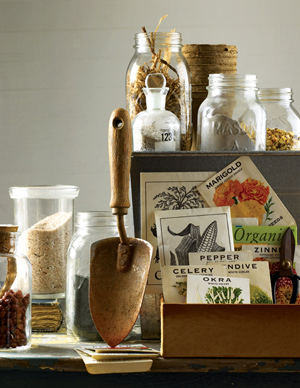
Getting Started Whether you go for the big backyard vegetable patch or small containers, come up with a plan. Think about what varieties you would like to grow and ultimately eat.
SPACE: Be realistic; consider the space you have before you plant. Most vegetables and herbs need six to eight hours of direct sunlight, so watch the sun (it changes a little as the season shifts) and see which parts get the most sunlight for the longest amount of time during the day. The space should also be in an area that has good drainage.
SOIL: If nothing but grass has been growing in the space, you will need to add some substantial amendments. One solution is to dig up the beds and then mix up the existing earth with an organic soil such as mushroom compost, a soil enhancer available at a local garden shop or hardware store.
SEEDS: Some vegetables are easy to grow from seeds and can be sown directly into the soil after the last frost date (always around the beginning of April). Follow the directions on the seed packet. Tomato seedlings can be purchased and planted after the last frost date as well. Support your local organic farmers, many of whom offer organic and heirloom seedlings at local farmers’ markets.
SOURCES: Check the Georgia Organics Local Food Guide; visit georgiaorganics.org for more information. Seed and Supply Sources include southernexposure.com, groworganic.com and seedsofchange.com. Contact your county extension agent to determine the pH level of your soil (and how much lime to add if necessary) as well as whether you have enough nitrogen, phosphorus and potassium to sustain a healthy plant.
Angie Mosier on … Learning to GrowI wasn’t always passionate about gardening and connecting with the land. It happened as I learned more about cooking and our past and my hope for the future. Although I always enjoyed planting when I was younger, it wasn’t until I met my good friend Ryan Gainey that I started to understand the real virtues of gardening.
Gainey’s garden designs are heralded near and far, and his personal Decatur garden is a wonderland. The first time I ever saw his work was at the Southeastern Flower Show many years ago. His interpretation of Mr. McGregor’s garden (the passionate farmer who’s nemesis was Peter Rabbit) was a mixture of storybook garden and a real plot that looked like a normal person might actually be able to achieve. It was laid out in a tiny space and each inch was covered in a practical design that fit lettuces and flowers together along with willow branches bent into heart-shaped trellises for peas to grow up.
I didn’t know him then but when I did finally meet him a couple of years later, I was starstruck. I thought that surely this man had grown up in the midst of wealth, been exposed to the world’s luxurious gardens as a child, but Gainey, like me, grew up in the Deep South and was brought up among the kitchen garden. He learned to grow things by planting what his family would end up eating. It was later that his curiosity, along with his love of art and beauty, would cause him to mix art with his agrarian past. The result is a master who connects himself with the land by planting but also by teaching regular folks like me how to do the same.
Now I garden without fear. Each season is a new opportunity to start over and try new things; each harvest is an invitation to create a new recipe or take a few extra tomatoes to a neighbor. In turn, I encourage you to do the same, and by doing so Gainey keeps spreading the message of growing and nurturing like so many lettuce seeds blown from his hand into a freshly dug bed.
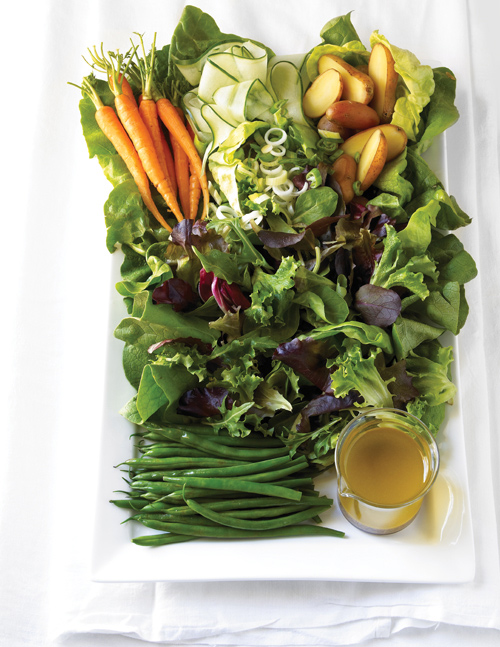 Spring lettuces in concert with baby carrots, new potatoes, haricot vert and baby Vidalia onions become a work of art when composed on a large tray. A simple cider vinegar dressing brings out the freshest flavors from the garden.
One of the most gratifying experiences as a cook is using ingredients you have grown yourself, even if it is only the sprig of mint atop a spring pea soup.

Local farmers plant strawberries aplenty—it’s one of the first things folks go crazy for at the markets. Even though the perfect strawberry dessert tastes wonderful, being in your own back yard and picking one to pop into your mouth as you pass by is priceless.